
Communal listening 🐚
How to curate a listening event

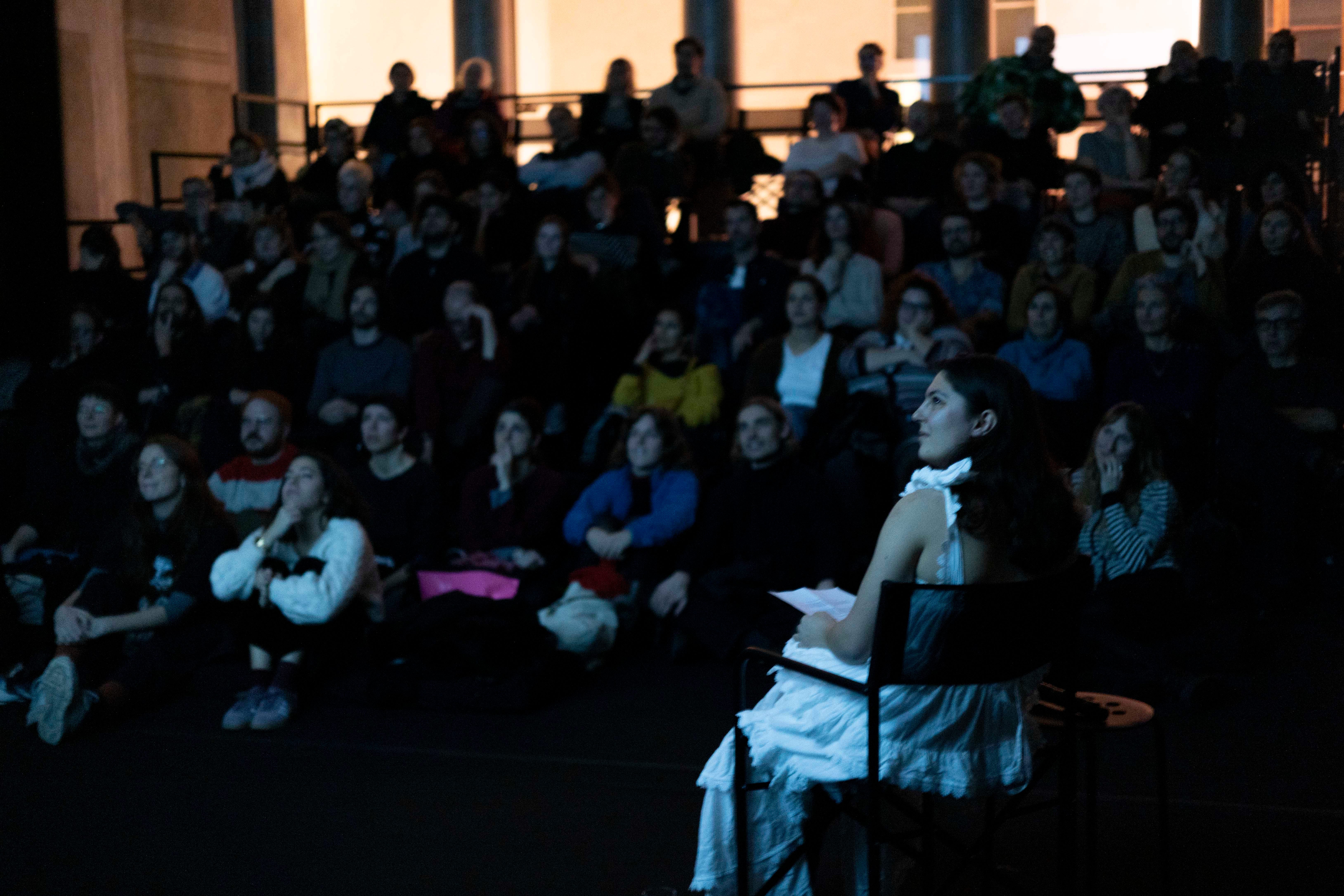
Over the past five years, I’ve sensed this yearning for communal experiences. And it’s not just concerts, theatre and book clubs — there are a growing number of listening events for narrative audio too. There’s something about giving a piece your full attention, not while you’re cooking or driving, that honors both the storyteller and your own time. Not to mention the energy and reactions of other people in the room.
Putting on your own listening event is an art: from selecting the right pieces to the way you present them to the audience. In this issue, Talia Augustidis shares her advice, after four years of curating listening events.
Talia is a multi-award-winning audio producer and community organizer based in London, and was previously the lead curator for In The Dark. Talia’s tips on curating your own listening club originally appeared in All Hear, the newsletter that Talia writes in collaboration with Transom.org.
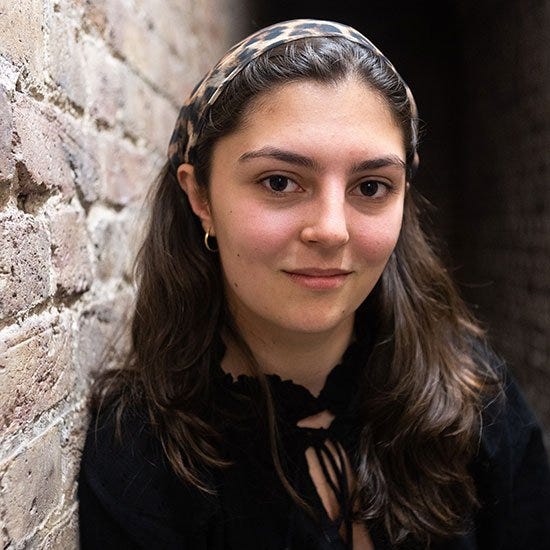
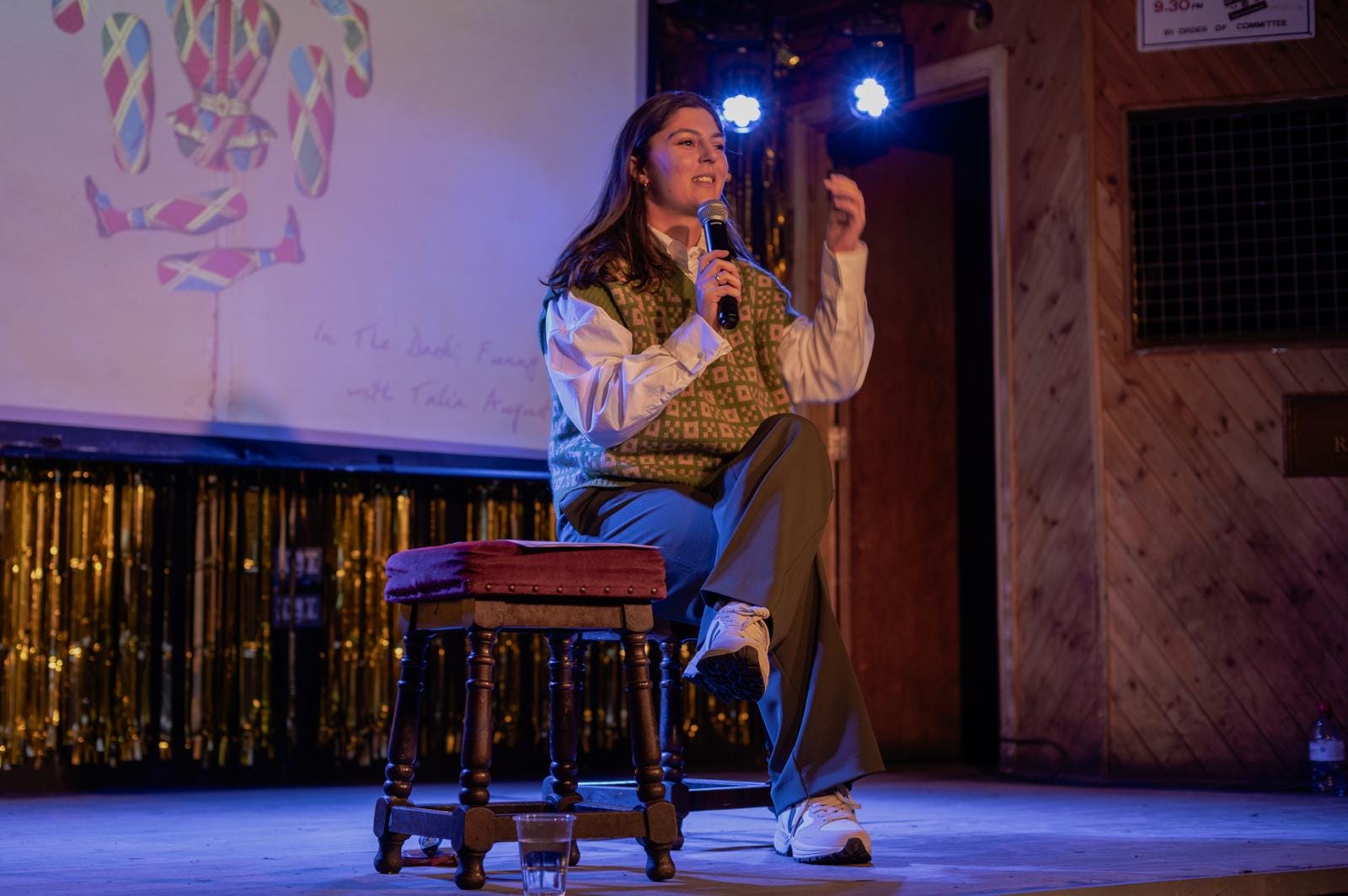
Between 2022 and 2026, I ran listening events with In The Dark, a collective that was founded in 2010 by Nina Garthwaite. Roughly every month I’ve invited a different curator to select pieces around a theme of their choosing. I have also curated events myself over the years, and will often help other curators with their selections, or the particulars, if they want support.
Over that time, I’ve built certain observations of what makes a successful event through trial and error. It’s very hard to know how something you listen to alone will actually land in a room. Pieces transform once they are heard collectively, which is a kind of magic. You can realise a certain moment is funny, because people laugh. Intensity is heightened when you notice that everyone is completely silent. It’s also cultural — I’ve done events in London that have felt great, and when I take them abroad they’re received completely differently. I’m continuously learning and adapting.
It’s also important to note that these findings are just my personal opinion. There are no hard and fast rules. Curation is like storytelling, it’s so dependent on personal style and taste, and variation is important. If everyone put on listening events in the exact same way, they would become boring and formulaic. Even with In The Dark events, part of the beauty is that each curator brings their own personal lens, and each producer of the events runs them differently. So please, do not take this as gospel, incorporate your own instincts and most importantly see how it feels in the space.
Structure and Tone
The first ever event I produced was co-curated with Nina Garthwaite, who founded In The Dark. Once we had chosen the pieces, she spent about 6 hours listening to various different iterations of the order to see what worked best. I was dumbfounded by her dedication to order back then, but I have since come to understand that the structure of the piece selection is one of the most important but perhaps overlooked aspects of a listening event. It’s a nice touch if the curation has thematic or intellectual arcs linking the pieces together, but personally I believe the tonal shifts are more key. Those are what audiences feel in their body.
One good rule, for example, is that I never start an event with a very intense piece. It’s important to ease listeners into it; I’ll often start with something short and light, then enter into a kind of transition piece, which in itself contains lightness and darkness, before a heavier piece.
Similarly, do not end with something exceptionally heavy, unless it’s extremely purposeful and delicately held by the presenter. In Alice Wilder’s Trauma Informed Reporting Manifesto for Transom, she advised that reporters “structure the interview so that you are not leaving them with memories and discussion of traumatic events. Before the end of the interview try to ground them back into the present moment”, asking them what they’re doing later, or something they’re looking forward to. Like interviews, communal listening is an embodied practice, and I tend to want to leave people with something lighter, funnier, or more high energy so that they can return to the world without heaviness.
Time
A big realisation for me was that the audience is giving you their time. Do not take that for granted. They have offered you one of their evenings, travelled, maybe hired a babysitter or bought dinner out for ease, to be in that room. There’s truly no need for the event to be more than 2 hours all in all, including one 15-minute break (it’s my pet peeve when there are two 20 minute breaks, it’s disrespectful of people’s time and people will leave before the final third).
Do not try and cram too much in; like with all good art you have to kill your darlings. Secondly, remember that time in a physical space is different to time in a recording. At home, people can switch off if they don’t like it, but in a physical space, if they are bored they may feel trapped. Generally, I play shorter pieces and excerpts (under 15 minutes), which means we are able to play a variety of pieces, and if people don’t like something they know that they don’t have to sit in that discomfort for too long. It’s important to me that I’m not catering towards an increasingly mainstream audience, or bowing down to shorter attention spans. One of my personal aims with the events is to expose audiences to lots of different styles, but it’s also important you don’t lose them completely.
It’s not about playing shorter and shorter pieces until everything is stripped of its heart. In fact, when there are too many short pieces in a curation it can feel like whiplash — just as you’ve settled in, you’re pulled back out again. As the late, great Chris Brookes said, “Radio is like a swimming pool. You have to gently nudge the listener into the pool, invite them in, get them to jump in with you”. Pick a combination of shorter and longer pieces that work, similarly playing with pieces of different paces to get a variety that has a rhythm.
Performance
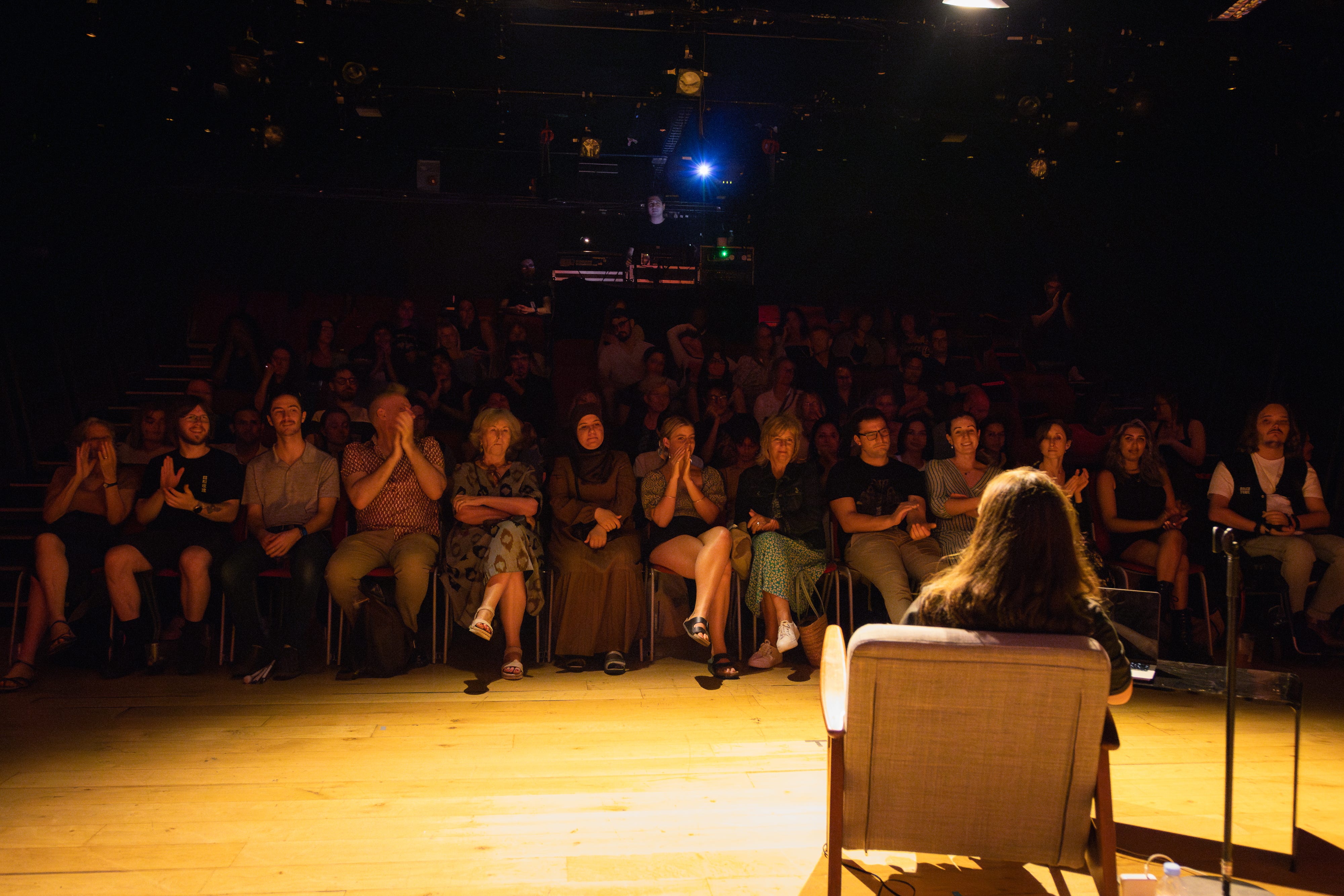
Another aspect of listening events that I believe tends to be overlooked is that the presentation of the works itself is a performance. I don’t want to scare audio people with that word; I don’t mean that you need to act, or pretend, but if the curator is going to present the clips themselves, then they should be prepared to really hold the space. Each curator will bring their own flare to the performance. Nadia Mehdi’s was so funny, it felt like a stand up special with audio clips. Taqwa Sadiq’s was gorgeous, and her interludes were poignant and poetic.
It can feel tense, or awkward, when you’re sitting in front of a crowd, especially if you’re playing more intimate or difficult pieces. Your instinct might instruct you to break the tension with a joke — “that was pretty heavy, wasn’t it?”… “bit of a vibe shift there…” — but I would encourage you not to. You can address the heaviness, but don’t try and patch over it; it won’t work and will ultimately create more discomfort. It’s also not treating the work itself with respect. Try, where you can, to feel with the audience, and don’t be afraid of showing your real emotions. Sometimes pieces I play will make me cry, and I won’t announce it, but I also have learned not to hide it, because that sense of shame might cause similar feelings within the audience.
If the idea of a performance doesn’t fit your style, you can structure the events differently. Some In The Darks have been co-curated by a big group and have had interstitial sound design connecting the pieces, like a non-narrated audio work. Or Jesse Lawson and Kit Callin present their Safe + Sound events hidden behind a table, because it’s a radio show and you wouldn’t typically see the hosts. It’s brilliant. There are many creative ways of presenting, but if you choose to present, then understand that you are the person that is going to hold and command that space.
Finding Pieces
Keep reading with a 7-day free trial
Subscribe to The Audio Storyteller to keep reading this post and get 7 days of free access to the full post archives.