
Make it feel real 🎤
Dennis Funk on how to pitch conceptual audio

Since 2022, West Virginia has had a near-total abortion ban. Documentary producer Dennis Funk heard reports of women coming to clinics near his home in Pittsburgh, to seek terminations. The anti-abortion protesters soon followed.
Dennis wanted to make a story about this—and he decided to focus on clinic escorts, volunteers who accompany patients to their appointments. Over the course of a year and a half, Dennis clipped lav mics on willing escorts, and recorded what they heard.
The result is Holding the Line, a short audio piece that brings listeners inside the experience of those escorts. You are there, outside the clinics, witnessing the hostility and fear, but also care and compassion.
Now… where does a story like that end up these days? How do you pitch a story like that?
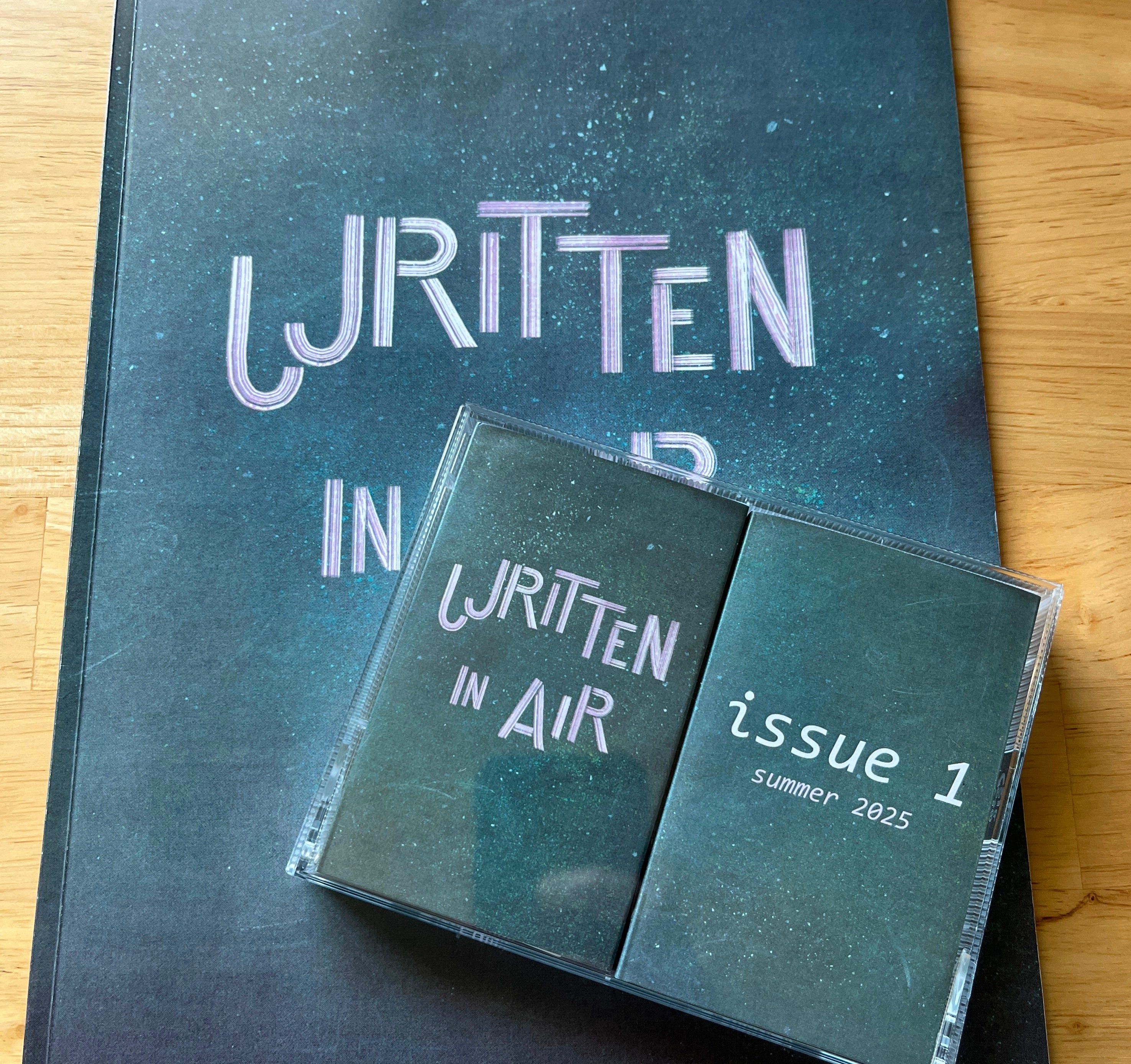
Dennis did pitch it around traditional outlets, without any luck. So now you can hear Holding the Line in Dennis’ audio magazine. Yes, an actual print magazine that comes with a digital version on BandCamp and even a cassette. It’s called Written in Air, and the first issue launched last summer. You can buy and listen here – which I strongly encourage you to do. Alongside Holding the Line, there are five brilliant audio gems by other producers, spanning collage, field recordings, essay, sound art and more.
In this conversation, Dennis shared why we need hopeful, creative audio right now; how to pitch your more abstract or conceptual ideas; and common mistakes that producers make when pitching him stories for the BBC.
Dennis is a producer, showrunner, sound designer and composer, whose work has featured in The 11th, Short Cuts, and the BBC World Service. His production studio, Written In Air, has collaborated with Pushkin Industries, Pineapple Street Studios, iHeartMedia and more.
How did the Written in Air magazine come to be? Where did the kernel of the idea come from?
[I was thinking about] where do stories like that live anymore? I love one-offs. Over time, I’ve grown to like podcasting and the idea of a show less and less, because of the parameters that start to exist. I wanted to make something that felt kind of formless.
I want people to be able to make what they want to make. So the magazine was about building a space where I was a cheerleader for producers, giving them guidance or the right connections. Most of the time, it’s just like, ‘hey I need money so I can spend time on this’.
It creates interesting, different types of work that can all live under this bigger thing. I also intentionally made the decision that this wouldn’t be a podcast at all. It would exist in a completely different format.
Talk to me about that decision: why did you choose to make it as a magazine?
I mean, the idea of audio magazines exists, obviously. This American Life is technically a magazine. I wanted to do something that could, if you wanted, completely remove you from your phone, from that eco-system.
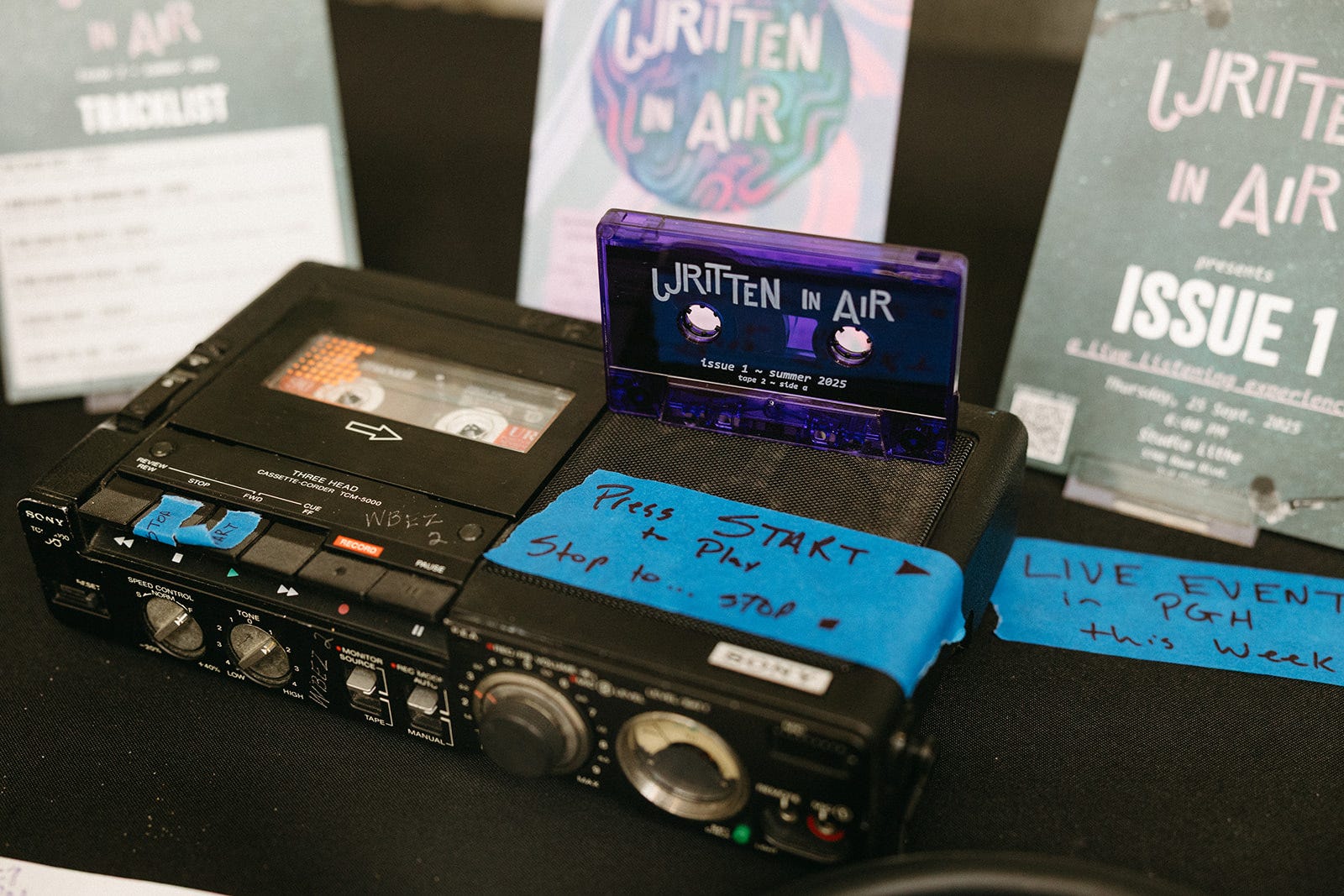
[The magazine comes with] cassette tapes. They’re like a collectors item. It’s like the potential of, ‘oh I could go out into a field with a tape player, put this on, and sit there with this magazine and have a two-hour experience of listening to audio without some sort of internet-connected device’.
That’s something people used to do, but we don’t do anymore. I felt there was value in it.
[An added benefit of a print magazine] is that I wanted listeners to be more exposed to audio cultures from around the world – so it has a printed transcript [translated into English] that you can read along with. I like that way of listening to stuff in other languages. It’s a little more tactile. You can sit in the audio a bit differently.
I even like the audio experience of having it available in the BandCamp app – because it’s very sparse. There are no links to click, or [distractions] that will take you elsewhere.
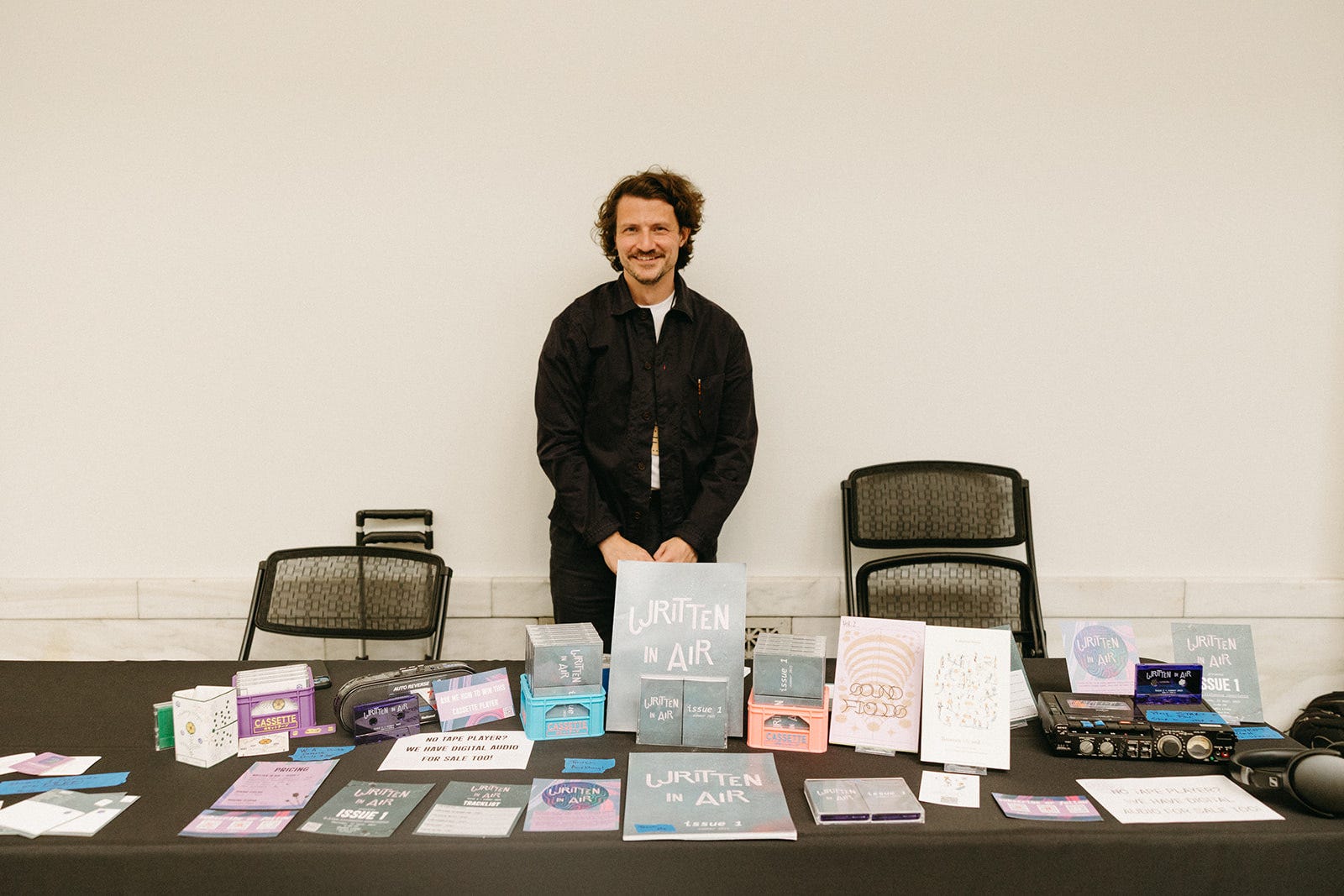
One of my other things was thinking about how we get our work out of the audio ecosystem and into other places, to grow audiences. So I’ve [taken Written in Air] to zine fairs, art book fairs, and publishing fairs. I take CDs that have the digital audio on them in a little sleeve with our logo – people are really excited by those.
When you introduced the magazine, you described it as “armchair travel for the human heart”. Why was that important, and how did you choose which pieces ended up in the issue?
The pieces are not all personal storytelling, but they’re deeply in people’s lives. I think when people are willing to speak with you [as a producer], they’re giving a part of themselves to you. That’s what I think audio is: we’re going through the complex emotionality of human life. Everything’s from the heart in that way.
There are also some investigative-style pieces which are complicated. I don’t have any rules around the types of stories we tell. The most important argument is: ‘well, why are we doing it in sound?’ It has to stand on its own in that way; it can’t be something I could have just read.
I’d love to hear more about why you decided to focus on the escorts for Holding The Line.
I live in Pittsburgh – we’re like 45 minutes from Ohio and equidistant from West Virginia, where there was an outright abortion ban. Things then got murky in Ohio. More people were coming here for abortions, but there were also more protesters coming here – because they’ve lost their places to go, and they still want to be angry.
I’ve seen those clinics, but as a bystander, you just walk past. You don’t linger there. So I was very curious about what it’s actually like to be there all the time. How does that work?
I got in touch with the clinic escorts and they agreed to let me record them. It was actually their idea to find ways [to record] where I wasn’t present. They [explained that] anytime the media is around, it’s not a normal representation of what things are usually like.
So the story was all recorded with clip-on lavs. I sat in my car and no one knew I was there. Ethically, we were fine – because the people who are there protesting, they film everything with GoPros. Every second of these interactions is already recorded anyway.
Afterwards, I interviewed the escorts. I did that for about 18 months. I recorded almost every Saturday. There’s a lot of material. That’s a big part of my work: sitting in a thing and taking the time to gather all the material. I got a grant from the Heinz Endowments to make this piece. To me, audio is so interesting when you’re able to show things moving through time.
So what’s your approach to then getting all that tape down to a six-ish-minute piece?
While I’m recording, I’m logging all of it, which was actually the nice thing about not being out there as a producer, is I could take super detailed notes of every single thing that’s happening, and type all that out. So I had a very kind of quick way of finding tape that I needed.
A lot of the escorts were willing to wear mics but didn’t want to do interviews. So in the end I only used scene tape from people who did give interviews.
I’m assuming at that point you didn’t know this story was going to end up in the Written in Air magazine?
No. I’d planned to pitch it to Lights Out and Short Cuts, but then they both got cancelled.
Then I realized it would make sense in the magazine. You’d asked me about choosing which stories go in the magazine: [one thing I consider] is how different the stories are from one another.
With this first issue, I feel like it’s very much an expression of all the different types of ways that you can tell stories in sound. Like there’s something archival; there’s a deeply reported piece with a lot of interviews; there’s a personal piece. It shows all the types of ways you can make things.
How is the magazine funded?
It comes from my pocket. That’s how I made this first one.
I’d applied for grant funding, but didn’t get it – because it was hard to describe [in the grant application]. There’s no reference point for it that already exists.
So I just decided: I need to just make this and pay for it myself. I’m not independently wealthy, I didn’t really have the money. But honestly I was at a point where I wasn’t very busy work-wise, because the audio industry is collapsing. It feels shit. And I really want something like this to exist. I was like, if this is the last thing I do before I have to go work in some other industry, I’m fine sticking my own money into it. So that’s what I did.
I literally just finished paying everybody last week. I was getting everyone on board [by saying]: ‘you will get paid for this. It’s going to take time, but if you also believe in the thing, we will do it.”
And it’s nice because now that it exists, I can apply for grants for future issues.
So what’s the plan going forward? Are you accepting pitches for upcoming issues?
I don’t have a formal process – it’s mostly been ideas that [have come to me] for the BBC commissioning rounds. They are stories I’m really excited by, but were not successful in pitching the BBC.
I want to try and get the money to do four more magazines, with 8-10 pieces in each.
Let’s talk about pitching stories to you for the BBC. What are some common mistakes that people make?
Keep reading with a 7-day free trial
Subscribe to The Audio Storyteller to keep reading this post and get 7 days of free access to the full post archives.