The deeper you go 💛
Helena de Groot gets personal

As a listener, I am so compelled by personal storytelling. Those immersive, intimate, reflective stories that draw you into someone’s life – inside their mind – as they confront an experience in real time. But as a maker, I shy away from putting too much of myself in my work. There’s an undeniable discomfort about scripting then recording my inner-most secrets.
This is exactly what Helena de Groot wrestled with as she made her brand new show Creation Myth – out this week in the CBC’s Personally feed. The turning point came when a friend gave her some counterintuitive but incredibly helpful feedback – a note that allowed her to go deeper in her storytelling, and tap into something universal.
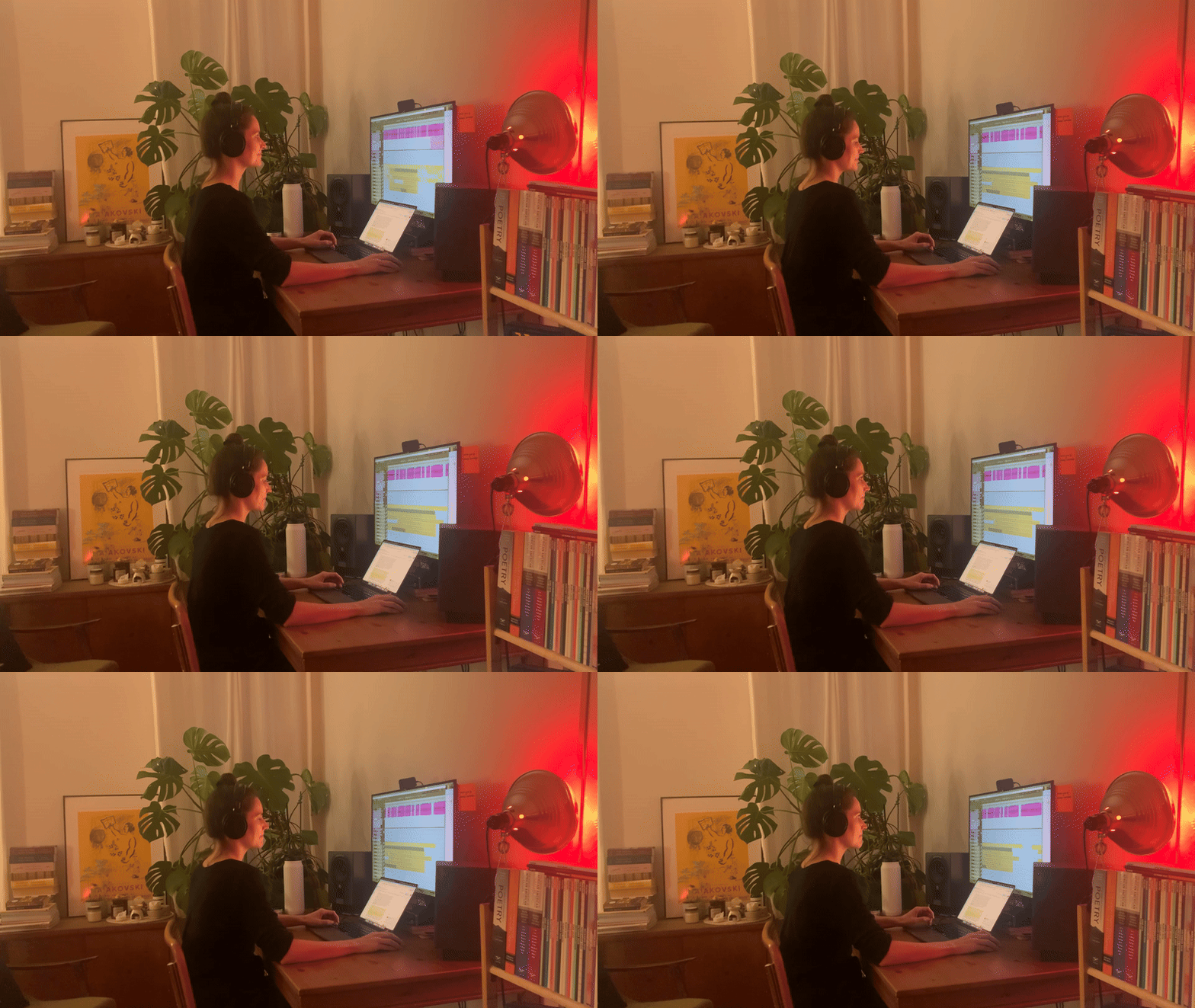
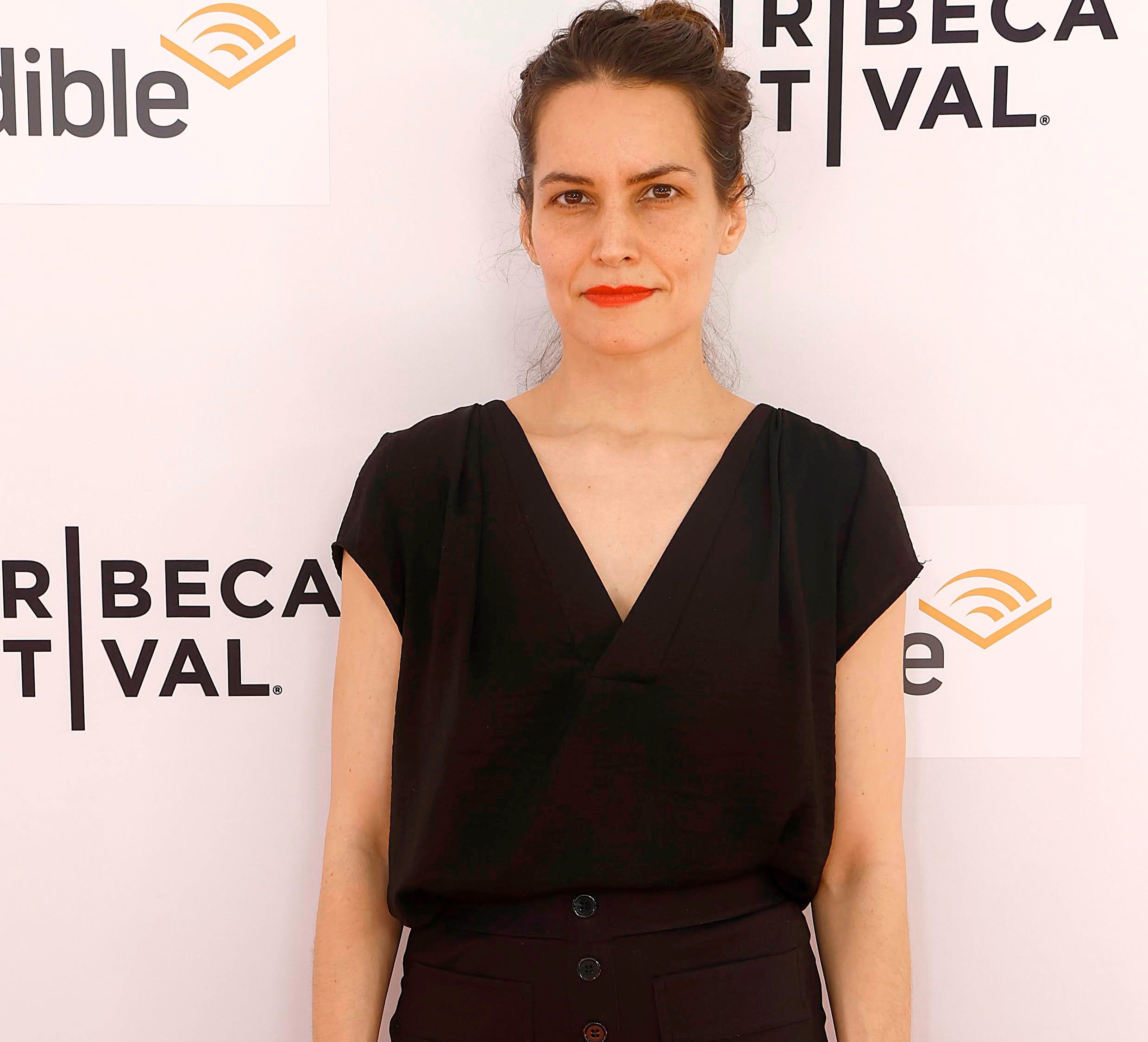
Originally from Belgium, Helena grew up in a family of musicians and went on to work as producer and sound designer. She is now based in New York, and she also produces the gorgeous show Poetry off the Shelf.
Creation Myth is about Helena’s choice to have (or not have) kids – but it’s actually a love letter to anyone who is struggling to make a difficult decision in their lives. Helena was so generous in this conversation – she told me how she faced the challenge of narrativizing her life, putting plot to her thought process; how sound design can add an entirely new POV; and why a powerfully emotional reaction from early listeners kept her motivated. And of course she tells me about that game-changing note (I have it as a post-it on my own desk now.)
Tell me about Creation Myth.
I started writing the show when my husband left. The reason he left was that, after eight years of marriage, and eight years of trying to change my mind, he finally saw that I would never want to have kids.
Once he was gone I thought, wow, I’ve maintained this position for so long, so ardently. But, why? Why is this so important to me that I’m willing to sacrifice this big love, this man that I moved across the ocean for? I was so puzzled by myself and sort of angry - like why couldn’t I just change my mind?
I wasn’t initially planning to make a podcast. All I wanted to do was process. I don’t journal the traditional way, on paper – I record things instead. So I started recording me talking to myself, talking to my [family, my] friends.
The show starts with this point of certainty: I’m going to investigate why I don’t want to have kids. But, quickly, I began having doubts. Like wait, do I want kids?! Because this decision is forever. Whether you have a kid or not, it’s forever. The idea that I might make a mistake was terrifying. Every time doubt crept in, I would go back to the drawing board. I would throw out everything I knew about myself, I was willing to rethink my identity. That’s why the show is called Creation Myth. Maybe it was all a myth, a story I told about myself.
At what point in the process did you pitch it as a story?
After my husband left, the project was very amorphous. I worked on it on the backburner for two years. I collected a lot of tape: I have more than 250 separate recordings, some are 10 minutes long, some 4 hours. Talking to my friends, talking to people who don’t have kids whose lives I can learn from. It was so inspiring but it was just a collection of tape.
A year later, my friend encouraged me to send a pilot to Tribeca. That was a helpful kick in the butt. I didn’t get selected but it was very invigorating to see: ‘oh this can be a shape that can exist in the world’.
One friend gave me feedback on the 35-minute pilot: that I went over the story beats too quickly. They said, “I feel like you should go deeper, you should really sit with these feelings and interrogate yourself more.” I thought it’d be so indulgent! But he said, “Helena, the deeper you go, the less indulgent it will be. People will only be able to connect to it when you go deep.”
I thought that was so good, so I put it on a sticky note on my computer screen: “the deeper you go, the less indulgent it will be.” Every time I think this project is too much about me, I think about that note.
I then sent a trailer to Resonate’s 2024 Pitch Party, and I won! I got a first-look deal with Virginia Public Media and $10,000 to make a [new] pilot. That was so transformative.
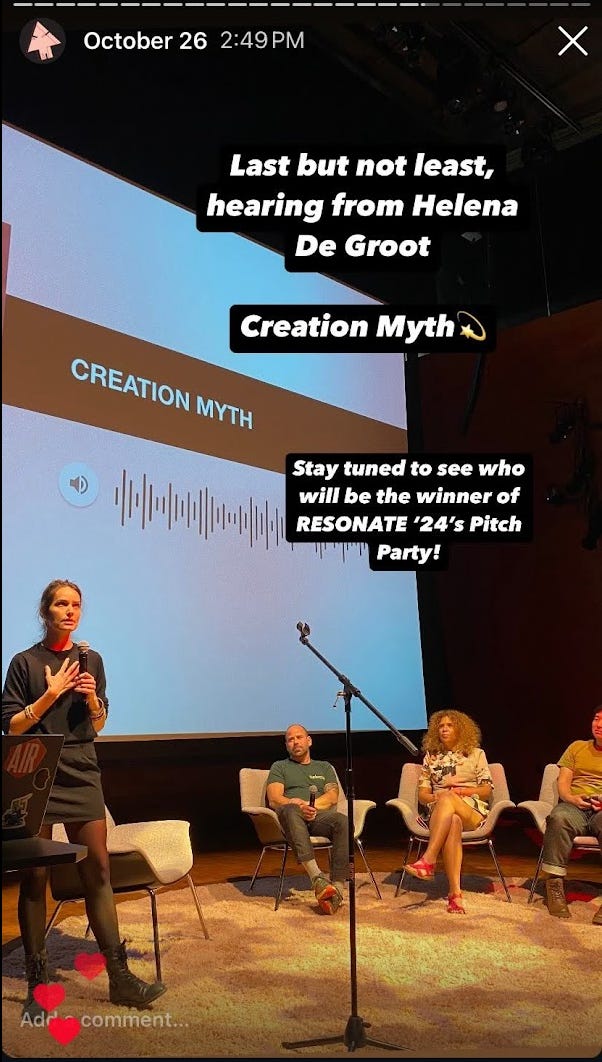
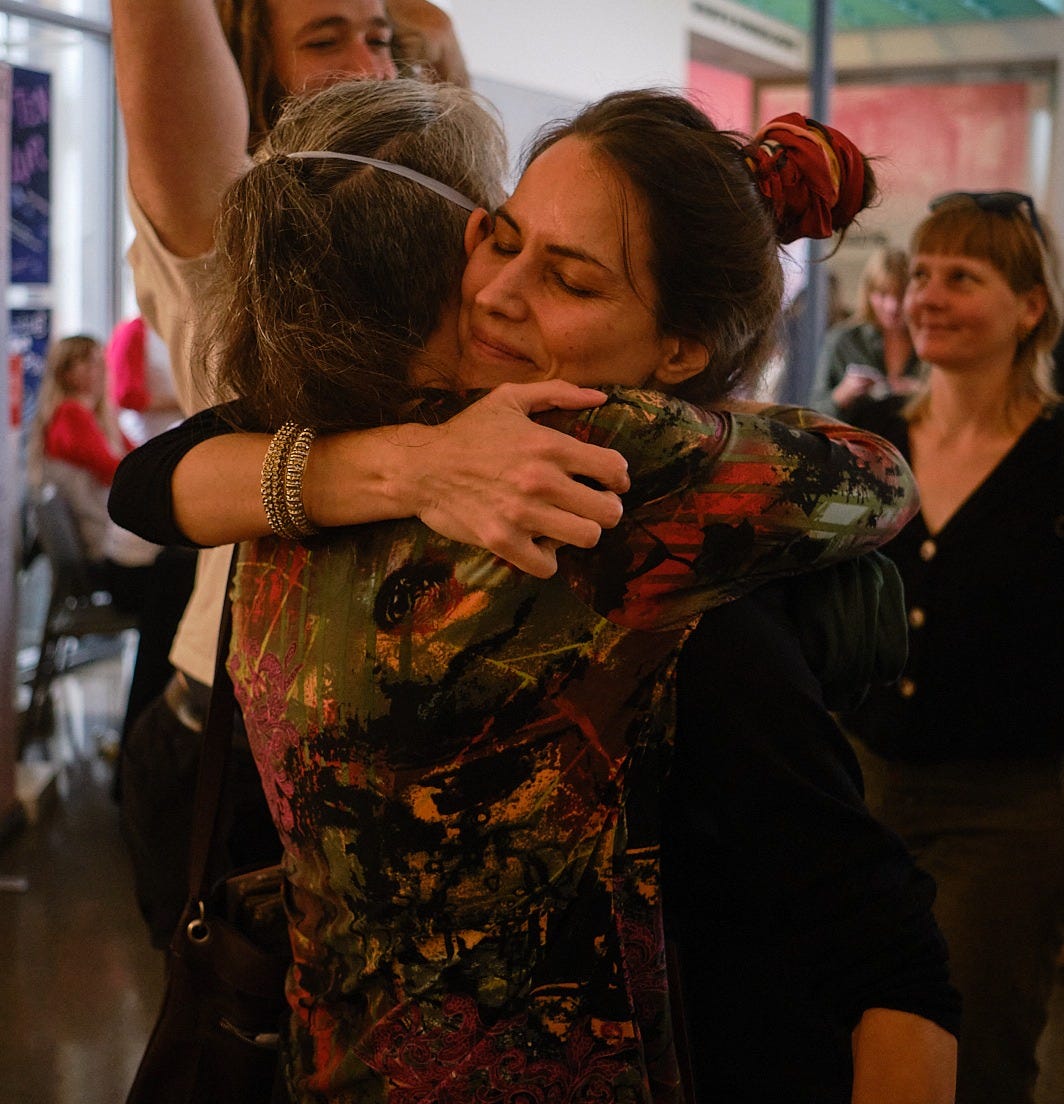
After I pitched the trailer in front of an audience and jury, people came up to me in tears – men and women with stories that sometimes resembled mine, but often not. What they all had in common was they were wrestling with a choice that people around them didn’t like. They were trying to stay true to themselves, but also trying not to hurt other people.
You mean choices that had nothing to do with having kids?
Yes!
Wow, so you had hit on something big.
Yes. And it released so much emotion. The fact that people connected to it so deeply made the project come to life [in a new way.]
It also made me realize that I’m not doing this for me – of course I will be the one doing it, and worrying if it’s good… but I have to push through that because there’s something here that people need – and it’s not about me and my ego. It’s an act of love for my fellow humans. We all have some decision in our lives that people don’t agree with, and we have to try and stick with it anyway.
Veronica Simmons from the CBC – who is now my editor – was in the audience at the pitch party. She reached out to me afterwards. And the CBC bought it. [And once I started working with the CBC, the show started changing. Because my editor Veronica had listened to some of the tape [of me interviewing friends of friends of friends who did not have kids], and she was like, “I’m so much more interested in you than in these other people [who have no connection to you.]”. She also encouraged me to go deeper on my own story. [I was hesitant, but a year later, I sent my new pilot to Tribeca, and this time I got selected. That helped me believe that all this me-me-me could be interesting to other people.]
The act of narrativizing a thought process must have been challenging – how did you give it plot?
Yes, this is a very good question, and this is the central struggle that I have with this show. You’re right. It’s like, [the story is] in my head.
But in terms of giving it plot, the first part was easy because a lot of things happened. I met a guy, I moved across the ocean, I told him I don’t want kids. He started pushing. He left. I met someone new, and that brought new doubt. Those are clear story beats.
But later on, nothing happens, as in there’s no plot – it’s me wrestling with a question. So this process became externalized through me talking to people who know me really well, that’s how I structured each episode. I found someone, like a close friend, my mother, or my sister, who would talk to me for that part of the story.
We would remember a moment or time together, and that’s how the stuff inside my brain could become externalized. [I would tell them how I felt, and they shared how they saw [me]. [And] those people also had different lives from me – most either have or want to have kids – so you get many more perspectives on the choice.
Then together, we retold the story of: what is it that I want, and who is it that I am, and in what way is my self image just a little bit off? And how can I rewrite the story?
When you and I were emailing last summer, you said you were in the middle of a very thorny narrative knot. Can you share what that was, and how you untangled it?
I don’t want to go into the specifics [to avoid spoilers!]. But what I can say is that it is weird to try and have profound insights about your life on a deadline. You don’t go to therapy, like, “by next week I have to have figured this out!”
It’s so interesting that you’re trying to figure out this personal problem in your life whilst trying to figure out a production problem at the same time. You also emailed me something Erica Heilman said, that she’s part of “the church of starting and finishing”. How did that work in practice? How did you keep going?
I mean, it helps that the CBC has put up money and I signed the contract!
But even before that, I did keep going. Even when I didn’t know if anything would ever come from it. [Previously,] In my creative life, I’ve had a million ideas, and I’ve started so many projects and then abandoned them as soon as I lost confidence a little.
I think with this… well, the movies, books and audio that I like best are when someone is actually figuring something out in real time. They’re genuinely processing a thing and they’re searching, it’s a quest. Something is eating you and you want to understand it. I think that’s why I kept going: the question literally had a hold on me and wouldn’t let go. And how could I let go of the project that was helping me figure it out?
Talk to me about the sound design.
Sound design is so important to me. I was raised in a family of musicians. My dad plays the piano. My mom is a singer. They made us go to music academy throughout my childhood. Like you learn how to read and you learn how to ride a bicycle and you learn how to play music. It was really like that.
Music is almost why I make audio stories. The words themselves are already musical. I write in a very rhythmic way. I have a cadence in my ear, and I try to syncopate sentences when I want the feeling of drag, or the feeling of doubt.
For me, music is a way to both underline something and contradict it. Sound design is a whole other layer. For example, maybe I’m being super dramatic in the VO, like, “Why can I not make this decision?!” But then I’ll use a silly clown song for the score. So the listener knows that I know I’m being ridiculous – in retrospect.
It’s almost like how point of view functions in literature. Is it first person? Is it close third? Sound design is the point of view. It’s the way I’m telling the story. So if I’m talking about eight years ago, I’m telling you how I felt eight years ago, but the sound design is me now.
Are you working with a composer or using a music library?
I use APM. APM is my happy place and my insane place. I love that every impulse that I have, they have something. It’s like any other scavenger hunt, some days you just are so lucky, and you find it’s like the gods of APM are favorable, and then you find one thing after another. And some days I spend hours not finding anything.
It sounds like you had a clear idea of the overall tone you wanted for the show.
My partner Brendan Baker is also in audio, he’s a sound designer. So I score everything, and then he listens and also talks through any problems I have. He’s like my sounding board, someone who has a little distance from the project who can help me when I can’t see it anymore. I come up with the ideas, create the first draft, then kick it over to him. He listens, suggests changes and when I agree with them, I implement them.
It’s like a story editor, but for sound design.
Yes and it’s great because he has given suggestions [to change] where to stop the music [stops—usually earlier than I did], and it really punctuates the story differently.
I once heard Leonard Bernstein say that, because a symphony is too long for people to pay attention the whole time, the job of a conductor is to basically tell the audience: this is when to wake up [and notice something]. I like to think of sound design like that.
Was there anything else you wanted to say on the challenge of making work from your personal life?
I think of memoir as something that happened in the past, and you know how it ended. For me, I didn’t know how it ended. It is by definition artificial, right? Nothing ended.
So it was a very existential thing to do, because I’m only 42 – I hope I have more life in me! But also I am closing a chapter. I’m thinking about the first half of my life in effect. And thinking about, what have I done with my life so far? What have I learned? Who have I come to understand myself to be? What is the meaning of my life?
If I hadn’t made this project… I mean, I guess that’s why people have midlife crises. But this felt a little bit like the opposite of a midlife crisis.
It has a spiritual component – and I don’t have a spiritual frame, I’m not religious. So it was interesting to find a shape for that anyway. I do think that making art is my spiritual frame.
It was helpful to have the art to rely on, to ask how can I make it beautiful? How can I make it emotional? How can I bring in all these different layers, how can I play with sound and language?
Those were the constraints that I worked in; that was my practice, my daily meditation. For me, art is how I look at life. It’s how I understand what life is. And it sounds grandiose or something, but I’m so grateful that I got to make this.
You mentioned the post-its on your desk – what are they?
There are two. “The deeper you go, the less indulgent it will be”.
The other is “never give up, always surrender”. That combination opened a door in my mind.
To me, “never give up” is like: keep striving, keep trying to expand, to face the world, to face life, not close off, take risks, put yourself out there, fall and get up. Deal with hard things and make it through.
But then, “always surrender”, that one is hard for me. I’m very good at not giving up. I am not good at surrendering because I’m a control freak, I like agency. So it’s this idea of, ‘you can only do so much, then it’s out of your hands’.
For instance when I have writer’s block, or a moment when I think the project’s going to fail, I look at that note: “never give up, always surrender”. I really believe that if you’re blocked, there’s a reason. You haven’t surrendered, you’re imposing your will on the thing. And maybe the sentence wants to be a different way. You have to let go of what you want it to be, and almost let it tell you what it wants to be. Oh my god, it sounds so woo woo.
You told me about the emotional, positive reaction that people had when you pitched Creation Myth at Resonate. How do you think people will respond when they hear the full season this month? Or are you trying not to think about that?
While I was writing it – like molding the story from the clay of my life – I couldn’t think about that. It would make me freeze up.
But now that it’s [almost] done and I’m in the sandbox part where I get to play with sound, I am thinking about how people will respond. It comes with a lot of fear. I know people will be judgmental while they’re listening – because that’s how we all are as listeners!
I’m also afraid of people on the far-right finding it. I’m questioning if my life has meaning without kids – which is like grist for their mill. But I didn’t want that to be a reason not to make the show. Trolls don’t deserve that kind of power.
But my hopes and dreams are… firstly that people feel buoyed by it. That they will feel supported in whatever decision they’re facing. That they feel permission to sit with it and make it complicated. I hope it can do something for people.
And also for me personally, I hope that this show will be a thing that will allow me to keep making things. Like I don’t want money or fame – I mean of course I want money, but it doesn’t have to be more than what I need to live and make things. I hope that people will be like, “Wow, we love that. We want to commission you to make a thing”.
If I can just go on and be a maker for as long as I’m alive, I’m happy.